Saturday, 27 August 2011
Rosario
Rosario; the big city with a small town feel, home to many musicains, poets and artists, and the birthplace of the great Che Guevara. Rosario is 4 hours north of Buenos Aires, known for its riverside beaches and creative population. Rosario is made of a random mix of old and new, its a city that doesn´t seem to now what it wants to be. Historical buildings stand squashed between modern architecture, and 30-storey buildings loom over streets of old classical houses.
Rosario doesn´t have much to offer tourists but it is the birth place of Che Guevara, and I was very interested to see where his family once lived. I expected the historical apartment to have been converted into a museum of Che´s life, however I was disappointed to find that it is still a residential building, and in fact the ground floor has been converted into a large bank. Not quite as exciting as I had hoped.
Parque Nacional a la Bandera, was more impressive and a pleasant surprise. It holds a historical monument and grand courtyard surrounded Argentian flags. We were able to go to the top of the 150m high monument via a lift inside, which offers fantastic views over the city and overlooking the river. Being at the top of the national monument was a reminder of what a huge city Rosario actually is, easily forgetten when walking around the narrow streets and along the riverbank.
It is possible to get a boat over to two nearby beach islands, however, given that the temperature didn´t rise above 3 degrees, we thought we would give the beach a miss.
Tuesday, 23 August 2011
Back to Buenos Aires
So, I am back in fabulous Buenos Aires, the city of beautiful cobbled streets, old European architecture, passionate people and delicious food. One area that I didn´t have the chance to explore on my previous visit was Puerto Madero, so I thought I would take some time to wander along the riverfront to see what it has to offer.
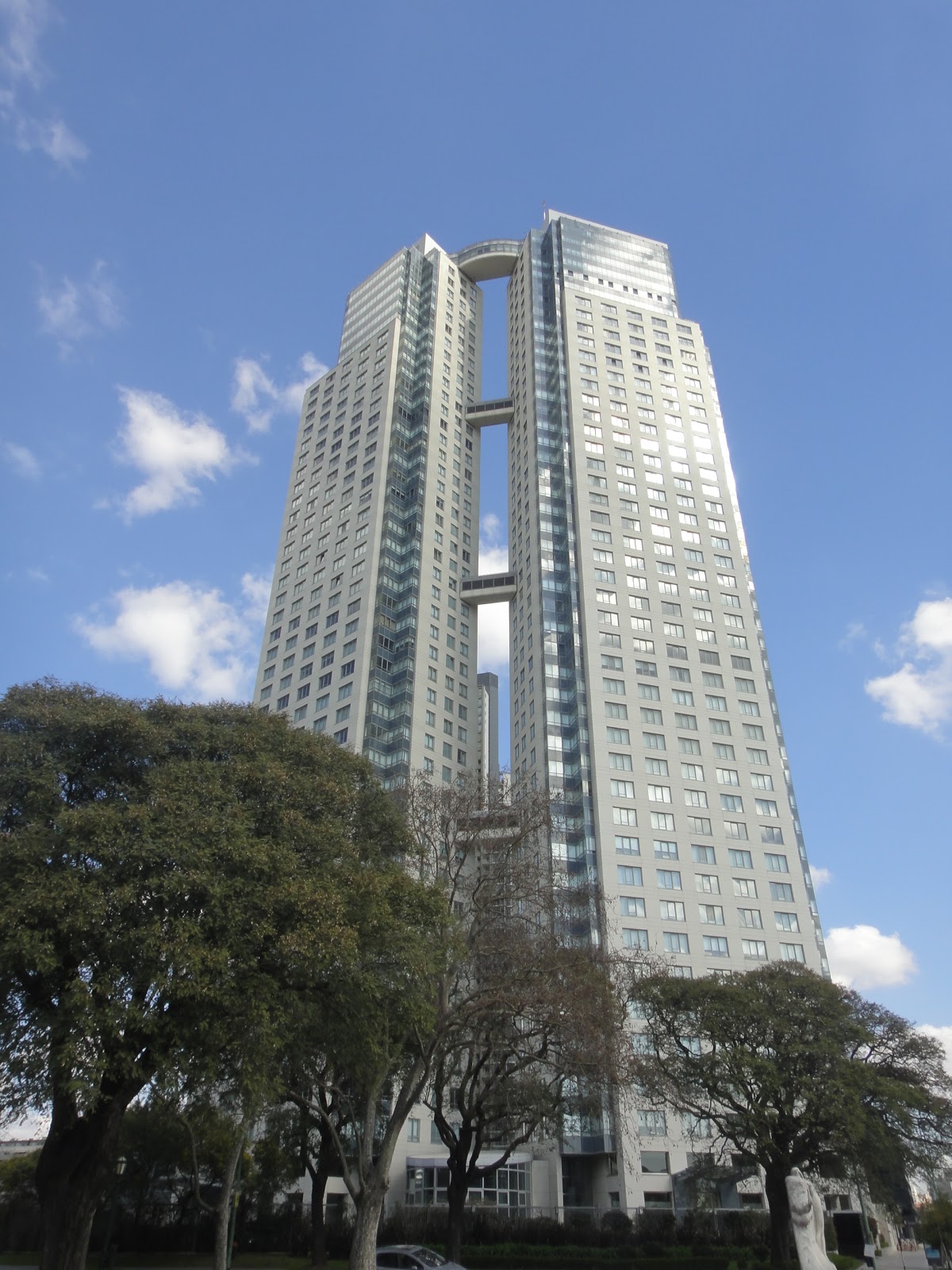
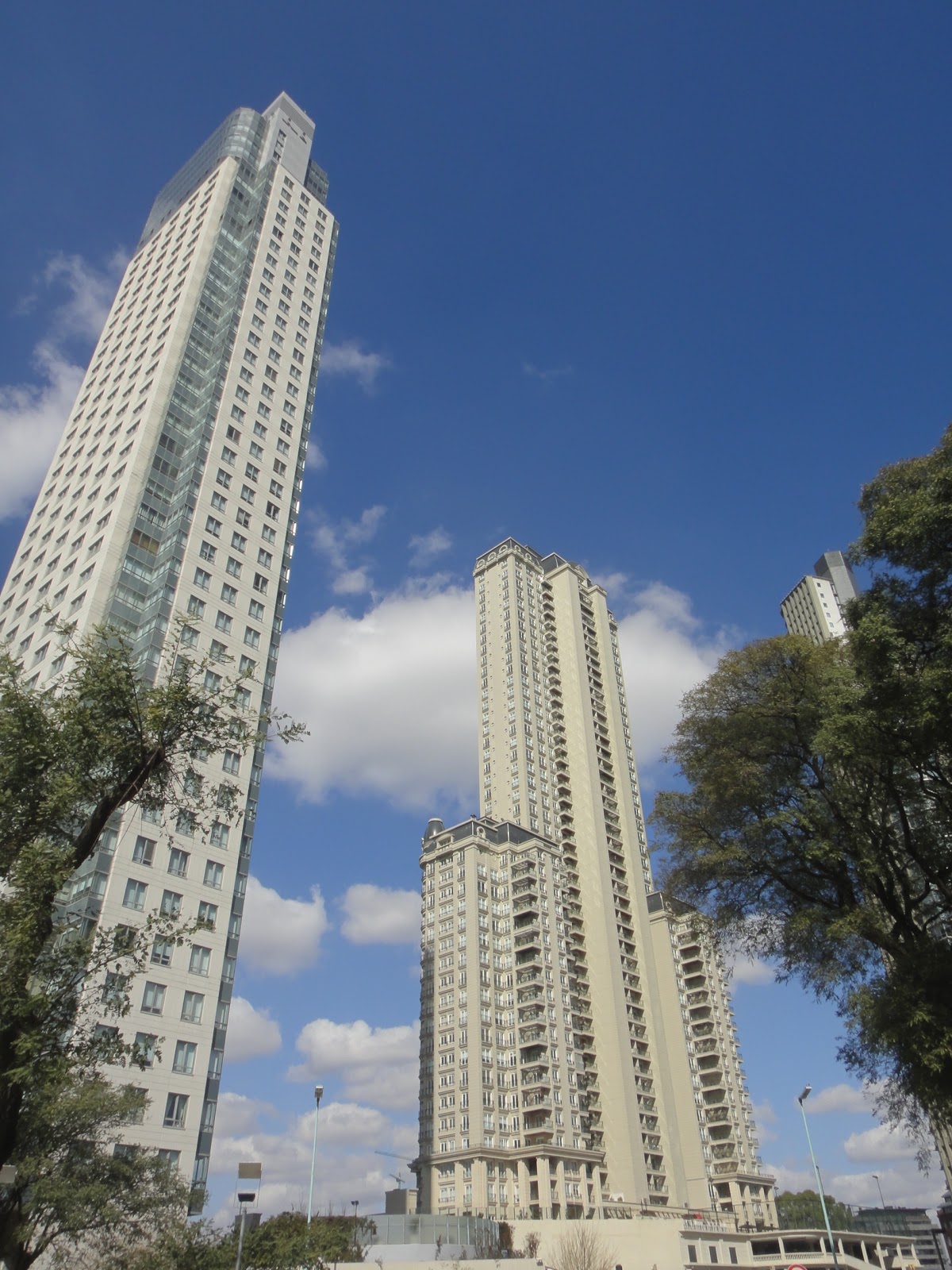
This was a side to Buenos Aires that I didn´t realise existed, a surprising and exciting discovery. It was a real contrast to the narrow streets, crumbled churches and classical European architecture of San Telmo and Centro. I felt as if I stumbled into a completely different city. Aside from the impressive, modern architecture, the area of Puerto Madero is very green with small grassy plazas, parks and a long market-covered walk-way overlooking what is soon to be a lagoon. Clearly Buenos Aires isn´t just about beautiful cobbled streets and classical, old architecture. There is even more to this vibrant city than I expected to find.
The riverfront of Puerto Madero is lined with swanky bars, fancy restaurants and shiny new skyscrappers, and the old red brick warehouses have recently been restored and converted into swish apartments overlooking the river. Walking further along, past the river, I was surprised to discover a hidden district of Buenos Aires that could easily be missed. A neighbourhood of towering buildings, modern architecture and metallic skyscrappers.
This was a side to Buenos Aires that I didn´t realise existed, a surprising and exciting discovery. It was a real contrast to the narrow streets, crumbled churches and classical European architecture of San Telmo and Centro. I felt as if I stumbled into a completely different city. Aside from the impressive, modern architecture, the area of Puerto Madero is very green with small grassy plazas, parks and a long market-covered walk-way overlooking what is soon to be a lagoon. Clearly Buenos Aires isn´t just about beautiful cobbled streets and classical, old architecture. There is even more to this vibrant city than I expected to find.
Thursday, 18 August 2011
Iguazu Falls, Argentina
After being utterly impressed with the Brazilian-side of Iguazu falls, we hopped over the boarder to see what Argentina had to offer. The falls on the Argentinian-side of Iguazu are on a much grander scale and there are three treks to the falls, each one displaying a different angle.
The first walk, the superiour trail, takes you along a narrow bridge on top of the ginormous waterfalls. Looking over the edge of the falls is quite exhilarating, if not slightly scary, as the fast-flowing stream at your feet plumets into the grand canyon and disappears into an explosion of mist.
The lower trail, the more moist trail, allows you to be up close and personal with these magnificant waterfalls. Standing infront of the overly powerful falls, the spray becomes a blanket of water leaving you soaking wet and breathless.
The final trail leads to Garganta del Diablo, Devil´s Throat. This is the biggest and by far the most impressive of all the falls. The short walk over the calm, gentle river is very misleading, as suddenly you are faced with an enormus canyon of fast flowing cascading waterfalls of indescribable size. Standing ontop of the Devil´s Throat is a surreal experience.
After returning to Iguazu town we decided to walk to Tres Frontara, the point were all three rivers from Paraguay, Argentina and Brazil join together, after casacding down some of the biggest waterfalls in the world. This was much calmer than standing at the top of Devil´s Throat!
| Paraguay to my left, Brazil to my right whilst I stand in Argentina. |
Wednesday, 17 August 2011
Iguazu Bird Park, Brazil
After seeing the almighty waterfalls, there isn´t much else to do in the little town of Foz De Iguazu, other than the bird park. So we went along as I was quite interested to see the bright pink flamingos and the big-beaked toucans. The large park is a little slice of jungle as the brightly coloured birds are able to fly around freely, unaware of the many tourists. The noise from the birds was deafening as there were squarks, squabbles and shrieks coming from all directions. Amongst the many tropical birds we saw pretty peacocks, blue and golden macaws, illuminous flamingos, tiny humingbirds, ginormous eagles and colourful toucans. As well as anaconda, alligators and boa constrictors, thankfully all caged.
It was a quite an expereince to be up close and personal with some of the most colourful, tropical, rarest birds in the world. However, I did feel rather uneasy as these slightly fierce, large-winged, big-beaked, fearless animals circled around me care-free at such a fast pace. I restisted the not-so-tempting offer to hold a giant macaw on my shoulder and opted to just stand in front of the squarking group.
Monday, 15 August 2011
Iguazu Falls, Brazil
After a long and tring 55 hour bus journey from Salvador I was relieved to arrive in the infamous Foz De Iguazu. Based on what I had read, and other travellers´ photos and experiences, I was expecting to be extremely impressed with Iguazu Falls. What I was not prepared for was how overwhelmingly magnificant the falls actually are.
We had a short walk through a noisy, wildlife covered slice of jungle to enter the falls. Bold butterflies of every size, colour and pattern fluttered around us and along the way we were able to see bitesized pieces of the incredible falls.
As we got closer to the waterfalls the thunderous roar became louder and we could feel the water spray on our faces. It wasn´t until we got to the view point that we could see the grand-scale of the amazing rainbow covered waterfalls.
No words, photographs or videos could possibly capture how utterly spectualar Iguazu falls is. With the rainbows, misty spray and tropical surroundings it looked truely magical.
Friday, 12 August 2011
Pelourinho, Salvador
Imagine an old European town with an explosion of paint, this is Pelourinho. The multi-coloured streets are filled with bright abstract art, restored houses and faded buildings. The faint sound of drums desperate to escape the walls of music schools, can be heard throughout the old town.
On Tuesday nights the streets truely come to life for ´Blessing Tuesday´´. Each of the unevenly cobbled streets host various forms of live Afro-Brazilian music, the streets and plazas burst open with the sound of thundering drums.
My personal favourite are a group of women and young girls playing traditional drums as loudly and lively as possible. As this group of energetic girls jumped around with their super-heavy drums, the lively crowd couldn´t help but dance. This was truely the spirit of Brazil!
Wednesday, 10 August 2011
Morro De Sao Paulo
I had read about a deserted paradise island in the north of Brazil called Morro De Sao Paulo and desperately wanted to visit there. Nikki and I boarded a little wooden boat no bigger than a fishing boat along with 50 or so locals. As we sat waiting to depart, men filled the colourful little boat with fruits, vegetables, meat, fresh fish, bottles of beer and just about everything else you can find in a supermarket. We sat squashed between the chaos watching and listening to the mayhem as the boat prepared to leave the port. Women breastfed their babies, children curiously ran around in what little space there was, and old women shared snacks and gossip. Our journey started slowly along the calm, gentle water through the surrounding jungle-covered islands. Twenty minutes later and the sea became rough as the rain came down rapidly, causing our little wooden boat to fill with water and everyone becoming wet and even more uncomfortable. As we arrived in sunny, pedestrianised Morro De Sao Paulo, we were greeted with taxis; men carrying wheelbarrows with ´taxi´written on the sides. Morro consists of a small village leading onto 4 small beaches appropriaely named 1st beach, 2nd beach, 3rd beach and 4th beach. Each beach is surrounded by jungle-covered mountains and the rocks in the sea have formed a natural tranquil swimming pool of crystal clear water. This would be the perfect paradise island if it weren´t for the upper-class hotels, swanky bars and restuarants not to mention the numerous tourists, volleyball games and ongoing beach ping-pong. Not quite the deserted island I was expecting. The best part of Morro is a bar just past the village, perched on a mountainside and hidden away by palm trees. It overlooks a quiet beach and the bay where the little fishing boats are docked. With hammocks, comfy cushions and tree swings, this is the perect place for a post beach caipriniha and the only place on the island where you can view the sunset.
Subscribe to:
Posts (Atom)